


Quick verdict
Microfiber is the better starting point for homes where nail contact and a soft hand matter most. Leather is the better fit when shedding and quick surface cleanup drive the decision. Neither label is a complete specification. Microfiber describes very fine yarns, while leather varies by hide layer, processing, and finish. Ask for the exact construction, care method, and performance evidence.
Microfiber and leather solve different pet-household problems. Microfiber is a textile category based on very fine synthetic yarns. Leather is an animal-hide material whose behavior changes with its type and surface finish.
The labels are useful, but they are only the beginning. A dense microfiber with a clear cleaning code can be an excellent everyday cover. A finished leather can make fur and crumbs simple to remove. Either can disappoint if the retailer omits the details that control care and wear.
Sources checked: ACT Contract Textile Glossary · FIRA leather guidance · FTC Leather Guides · Sol Place Sunset Sofa Bed · Sol Place FAQs
Key details compared
Microfiber and leather solve different pet problems, and the table shows where each one leads. It compares pet hair removal, claw contact, spill response, feel, repair, and buying transparency. The practical edge column gives the quick answer: leather for hair and repair, microfiber for claw contact.
Spill response is the row to read closely. Results depend on the finish and cleaning code for both materials. Some microfiber lets liquids bead while others absorb, and finished leather can be damaged by excess water or the wrong cleaner. Ask for written care rules, then check the rest of the table.
Compare the exact configuration, care rules, and open footprint before deciding. Category labels alone do not guarantee comfort or durability.
| Criterion | Microfiber couch | Leather couch | Practical edge |
|---|---|---|---|
| Pet hair removal | Dense surface can release hair well, but static and surface texture vary by product. | Hair remains on top of a smooth surface and is usually easy to wipe or vacuum. | Leather |
| Claw contact | Low-profile constructions have fewer large loops than boucle or loose weaves, though punctures and abrasion remain possible. | Nails may leave a visible scratch, scuff, or puncture. | Microfiber |
| Spill response | Varies by finish and cleaning code; some liquids bead, while others absorb. | Finished leather can often be wiped promptly, but excess water and the wrong cleaner can damage it. | Depends on finish |
| Feel | Soft, textile-like hand with product-to-product variation. | Smooth surface that can soften and crease with use. | Personal preference |
| Repair | Small snags or worn areas may be difficult to make invisible. | Specialists can assess many scuffs, scratches, and small damaged areas, though results vary. | Leather |
| Buying transparency | Ask for fiber content, yarn and surface construction, test results, and cleaning code. | Ask for leather type, finish, and whether non-contact areas use a different material. | Tie |
Measure first Confirm delivery access, closed dimensions, open depth, and walking clearance before ordering.
Side by side
Seeing each couch on its own card makes the tradeoff easier to judge. Microfiber suits pet owners who want a soft, dense textile and worry most about snagging or visible claw lines. Leather suits owners who want fur, crumbs, and surface debris gone quickly.
Read the tradeoff lists before the strengths. Microfiber does not automatically mean stain-resistant, and cleaning rules vary by backing and finish. Leather can keep claw lines visible and needs finish-specific care. Each list tells you exactly what to verify before you buy, so keep it open while you shop.
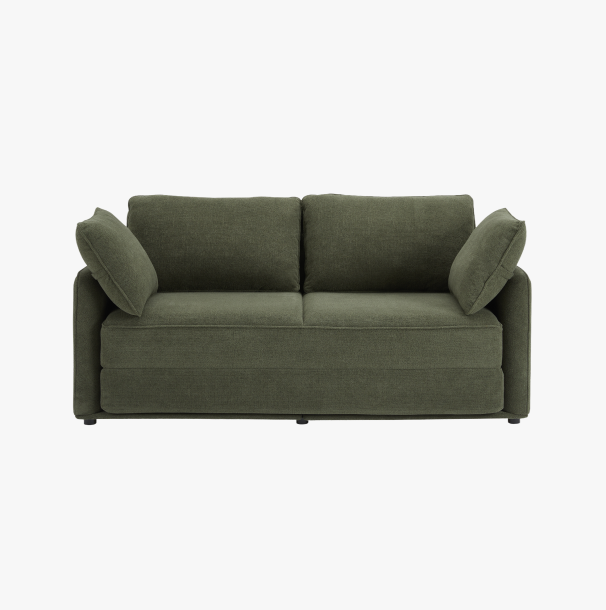
Option A
Microfiber couch
- Pet hair removal
- Dense surface can release hair well, but static and surface texture vary by product.
- Claw contact
- Low-profile constructions have fewer large loops than boucle or loose weaves, though punctures and abrasion remain possible.
- Spill response
- Varies by finish and cleaning code; some liquids bead, while others absorb.
Best for: Pet owners who want a soft, dense textile and are most worried about snagging or visible claw lines
Strengths: Very fine yarns can form a dense upholstery surface; Often feels soft without a deep looped texture; Available across many colors and furniture price points.
Tradeoffs: Microfiber does not automatically mean stain-resistant; Cleaning rules differ by backing and finish; Oils and residue can change the appearance of some surfaces.
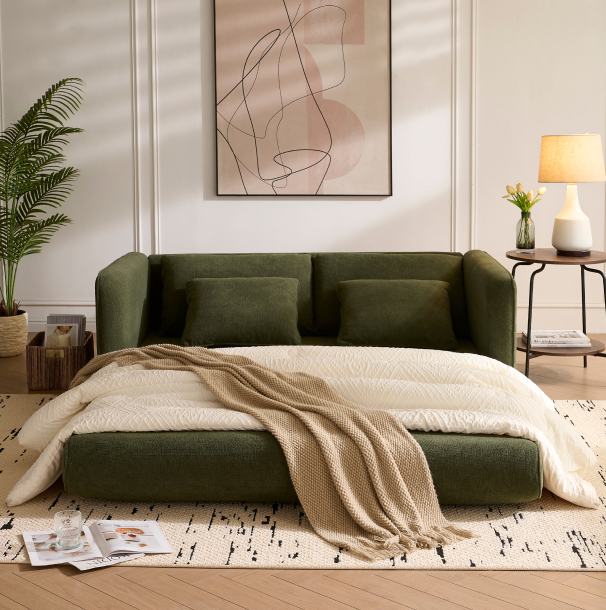
Option B
Leather couch
- Pet hair removal
- Hair remains on top of a smooth surface and is usually easy to wipe or vacuum.
- Claw contact
- Nails may leave a visible scratch, scuff, or puncture.
- Spill response
- Finished leather can often be wiped promptly, but excess water and the wrong cleaner can damage it.
Best for: Pet owners who prioritize quick removal of fur, crumbs, and surface debris
Strengths: Smooth surface makes loose-hair cleanup direct; Finished upholstery leather can be wiped after many fresh spills; Specialist repair may be possible for some damage.
Tradeoffs: Claw lines may remain visible; Finish-specific care is required; Leather grade and non-leather content need close reading.
Feature checklist
Labels promise less than most shoppers think. The checklist sets out what each term means, what it does not prove, and the most useful check before purchase. Microfiber, for example, describes very fine synthetic yarns, not stain or claw resistance. That gap is why the swatch and written cleaning code matter.
The Sol Place row clears up a common mix-up. Sol Place calls its smooth option 100% polyester performance fabric, not microfiber, and the Sunset Sofa Bed is not offered in leather. Sol Place describes that fabric as scratch-resistant and water-repellent, so it is worth adding to your swatch tests.
These are the details most likely to change ownership experience. Verify current product specifications and policies before purchase.
| Feature | Microfiber couch | Leather couch |
|---|---|---|
| What the term means | ACT defines microfiber as very fine synthetic yarns with one denier per filament or less | A hide-based material whose upholstery properties depend on type, finish, and processing |
| What the term does not prove | Stain resistance, claw resistance, abrasion level, or permitted cleaning method | Full-hide coverage, scratch resistance, waterproofing, or a specific grade |
| Most useful pre-purchase check | Swatch plus written cleaning code and performance data | Material disclosure plus finish-specific care guide |
| Sol Place context | Sol Place calls the smooth option 100% polyester performance fabric, not microfiber | The Sunset Sofa Bed is not offered in leather |
Which fits your home?
Start from your pet, not the material. These cards pair a household with a pick and the reason behind it. A short-haired dog that sheds daily points toward finished leather for faster cleanup. A cat that occasionally kneads points toward a dense microfiber swatch, with seams and corners checked.
The last card covers a convertible sofa in a busy living room. There, cover material is only one part of service life. The Sunset Sofa Bed pairs its upholstery with two layers of CertiPUR-US foam, an FSC-certified poplar plywood frame, and solid rubberwood legs. Pick the card that sounds like your home.
A short-haired dog that sheds daily
Start with finished leather if surface cleanup is the top priority.
Leather keeps loose hairs on a visible, smooth plane, which can shorten the cleanup routine. A microfiber swatch may also release hair well, but test it with fur or thread before ordering.
A cat that occasionally kneads
Start with a dense microfiber swatch and inspect seams and corners.
A dense microfiber surface has no large loops by definition, although the finished fabric can still snag, abrade, or puncture. Leather may show a permanent line after one firm claw pass.
A convertible sofa in a busy living room
Buy on complete construction and documented care, not upholstery name alone.
Cover material is only one part of service life. Check the frame, foam, seams, conversion mechanism, and return window. The Sunset Sofa Bed uses two layers of CertiPUR-US polyurethane foam, polyester wadding and fiberfill, an FSC-certified poplar plywood frame, and solid rubberwood legs.
FAQ
Microfiber couch vs leather couch: FAQ
Pet owners comparing these materials tend to ask the same things. The answers cover microfiber versus polyester, pet hair, muddy paw prints, dog scratches on leather, and whether the Sol Place performance fabric counts as microfiber.
Is microfiber the same as polyester?
No. Microfiber describes yarn fineness. Polyester is a fiber type. Many microfiber upholstery fabrics use polyester, but a product should state its own fiber content and construction.
Does microfiber attract pet hair?
It can, but the result varies with surface texture, static, finish, and the pet's coat. Use a swatch test: press hair or thread into the face, then try your usual vacuum attachment or lint roller.
Which material is easier to clean after a muddy paw print?
Finished leather may allow a prompt damp-cloth wipe. Microfiber care depends on its cleaning code and finish. In either case, follow the manufacturer's method and test any product in a hidden spot first.
Can a dog scratch a leather couch?
Yes. Nails can scuff or cut the finish even when the dog is only jumping up or down. Keeping nails trimmed reduces risk, but it does not make leather scratch-proof.
Is the Sol Place performance fabric microfiber?
Sol Place identifies the smooth performance fabric as 100% polyester, scratch-resistant, and water-repellent. Its published product information does not call it microfiber, so it should not be labeled that way without further documentation.
Keep reading
More sofa guides from Sol Place
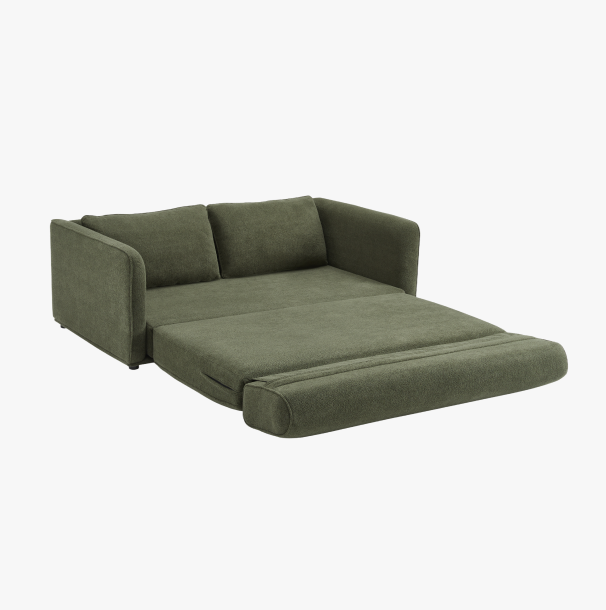
Scratch-Resistant Sleeper Sofa
Memory Foam vs Innerspring Sofa Bed Mattress: Which Is More Comfortable?
Read more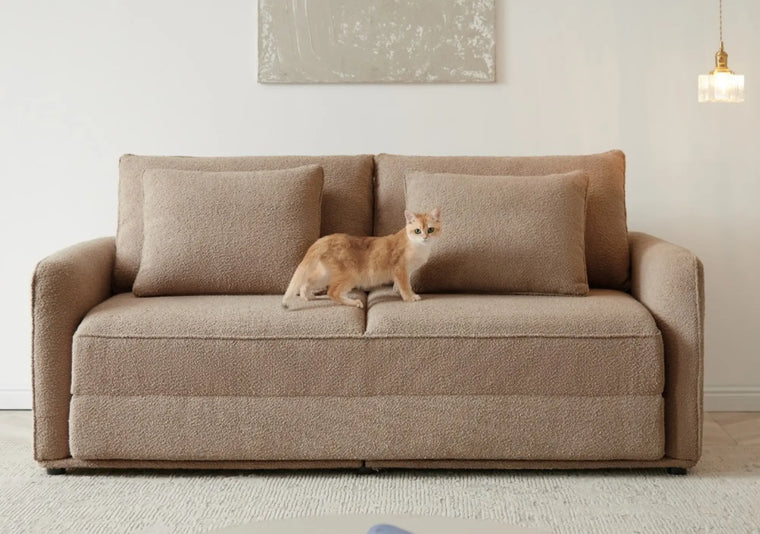
Scratch-Resistant Sleeper Sofa
Sectional vs Sofa: Which Works Better in a Pet-Friendly Living Room?
Read more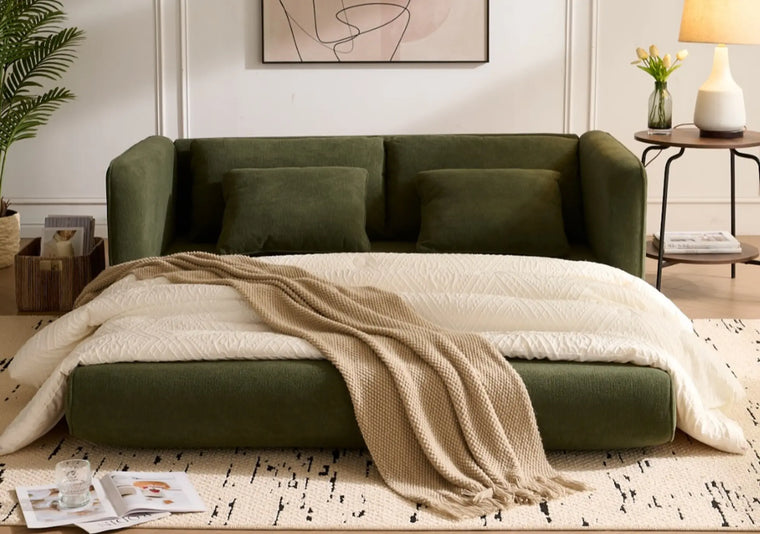
Scratch-Resistant Sleeper Sofa