


Quick verdict
Choose a sofa bed when the room is primarily a living room and the bed is for guests. Choose a daybed when sleeping is frequent, a standard mattress matters, or the piece belongs in an office or bedroom rather than the center of a seating plan. In a small apartment, the winner is the option that fits in both its normal and guest-ready state without blocking the room's only path.
The space-saving story changes depending on the hour. A daybed uses roughly a mattress-sized footprint all day and needs no large unfolding zone at night. A sofa bed may be shallower while closed, but it asks for clear floor in front when opened.
Neither is automatically smaller. Wayfair's daybed guide notes that twin models commonly use a 75-by-38-inch mattress, while larger daybeds exist. Sofa-bed dimensions vary much more by mechanism. Draw both positions on your floor before comparing style or color.
Sources checked: Your Guide to Daybed Sizes and Mattress Sizes · What Is a Daybed? · Sunset Sofa Bed Dimensions · Sunset Sofa Bed
Key details compared
Start with the side-by-side table that follows. It lines up the questions that shape daily life with each piece: how it looks in the room, how it seats you, how it becomes a bed, what mattress it takes, and how many guests it can sleep. The last column names the practical edge for each row.
Read it with your own room in mind. A sofa bed wins on seating and on two-person sleep, since it comes in twin, full, and queen. A daybed wins on quick setup and mattress choice. If the room is mostly a living room, the sofa bed rows are the ones to weigh most.
Compare the exact configuration, care rules, and open footprint before deciding. Category labels alone do not guarantee comfort or durability.
| Criterion | Sofa bed | Daybed | Practical edge |
|---|---|---|---|
| Primary identity | Looks and functions primarily as a sofa. | Uses a mattress on a three-sided frame and reads more like a bed. | Depends on room type |
| Seating | Built with sofa seat depth, back cushions, and arms. | The mattress forms the seat; deep back pillows are often needed for upright sitting. | Sofa bed |
| Sleep setup | Requires a fold, slide, or pull-out step plus bedding. | Usually needs only pillows moved and bedding arranged. | Daybed |
| Mattress choice | Depends on the mechanism; many use integrated foam or a model-specific mattress. | Often accepts a standard mattress size stated by the frame maker. | Daybed |
| Guest capacity | Available in twin, full, and queen configurations. | Twin is common; larger and trundle designs are available. | Sofa bed for two-person options |
Measure first Confirm delivery access, closed dimensions, open depth, and walking clearance before ordering.
Side by side
Each card gathers one option's strengths and tradeoffs in a single place. The sofa bed card covers a piece built for daily seating that converts for an occasional guest. The daybed card covers a mattress on a frame with a back and side panels, ready for one sleeper all day.
Look at the tradeoffs first, since they are what you live with. A sofa bed asks for conversion clearance and sometimes a moved coffee table. A daybed can read as a bed in your living room, and twin size is common. Pick the list of compromises that bothers you least.
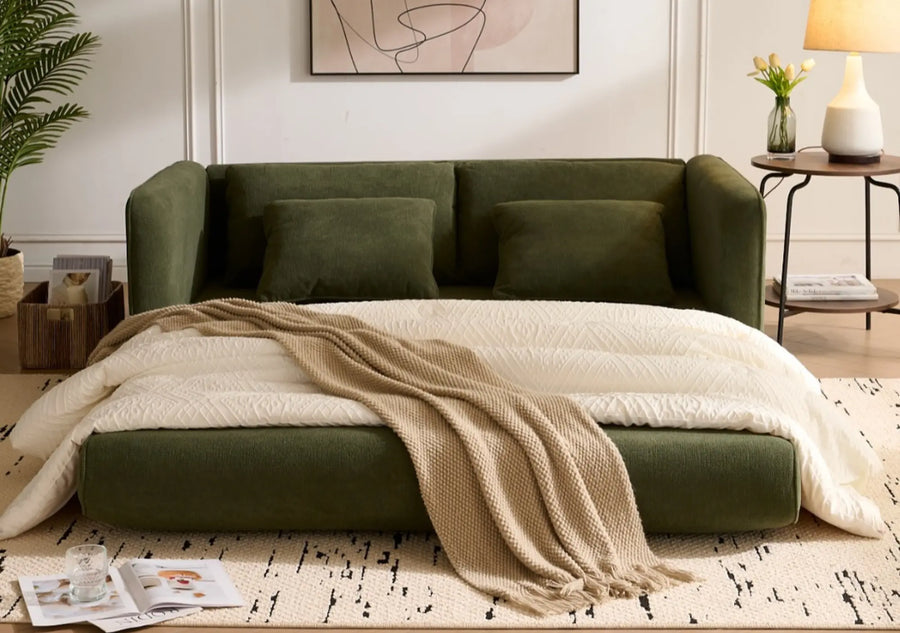
Option A
Sofa bed
- Primary identity
- Looks and functions primarily as a sofa.
- Seating
- Built with sofa seat depth, back cushions, and arms.
- Sleep setup
- Requires a fold, slide, or pull-out step plus bedding.
A sofa designed for daily seating that converts to an occasional sleep surface.
Strengths: Better suited to a conventional living-room layout; More supportive upright seating in many designs; Available in several sleep widths; Hides bedding function between visits.
Tradeoffs: Needs conversion clearance; Can be heavy; Sleep surface varies widely; May require moving a coffee table.
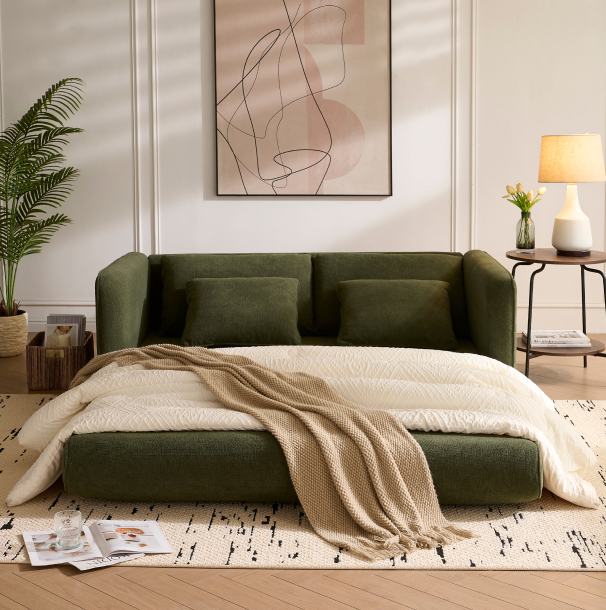
Option B
Daybed
- Primary identity
- Uses a mattress on a three-sided frame and reads more like a bed.
- Seating
- The mattress forms the seat; deep back pillows are often needed for upright sitting.
- Sleep setup
- Usually needs only pillows moved and bedding arranged.
A mattress platform with a back and side panels that supports sitting, lounging, and sleeping without a major conversion.
Strengths: Always ready for one sleeper; Often works with a standard mattress; No pull-out mechanism; Some models add under-bed storage or a trundle.
Tradeoffs: Can read as a bed in a living room; Mattress depth can be awkward for upright seating; Decorative pillows must be moved; Twin size is common, which may limit capacity.
Feature checklist
Ownership details tend to show up after delivery, and the checklist collects them in one place. It covers how you sit day to day, how you set up at night, how to test your floor plan, where storage can go, and how pets change cleanup for each option.
The final row puts a real product next to the category. The Sol Place Sunset comes in twin, full, and queen, and the queen measures 70 inches wide and 39.5 inches deep when closed. A standard twin daybed mattress runs about 75 by 38 inches, so the closed depths land close together.
These are the details most likely to change ownership experience. Verify current product specifications and policies before purchase.
| Feature | Sofa bed | Daybed |
|---|---|---|
| Daily sitting posture | Designed around a sofa seat and back. | A twin mattress is about 38 inches deep, so many adults need substantial back pillows. |
| Nightly setup | Open the mechanism, then add sheets and pillows. | Remove decorative cushions and make the existing mattress. |
| Floor-plan test | Mark both closed depth and full open depth. | Mark the fixed mattress footprint plus any trundle extension. |
| Storage | Storage is model-specific and may be limited by the conversion mechanism. | The space under the frame may hold drawers or a trundle, depending on the design. |
| Pet use | Upholstery and conversion seams need cleaning and snag checks. | A replaceable mattress cover can simplify cleanup, but exposed wood or fabric panels still need protection. |
| A Sol Place example | The Sunset offers twin, full, and queen versions. The queen is 70 inches wide and 39.5 inches deep when closed. | A standard twin daybed mattress is typically about 75 by 38 inches, so it is longer along the wall but similar in closed depth. |
Which fits your home?
Real apartments rarely match a category description, so the cards that follow start from the room instead. Each one names a common small-space setup, gives the pick that suits it, and explains the reasoning in a few lines you can check against your own floor plan.
Find the card closest to your home. A studio with one seating zone points to a sofa bed, a home office with one guest points to a daybed, and visiting couples point to a full or queen sofa bed. The Sunset comes in both of those larger sizes, plus twin.
Studio apartment with one main seating zone
Sofa bed
A true sofa back, seat, and arms usually make more sense when this is the room's only place to sit. Pick a mechanism that does not require wrestling the piece away from the wall each night.
Home office that hosts one guest
Daybed
The fixed mattress can double as a reading perch without adding a conversion routine. Choose the mattress first if overnight support matters, then choose a frame that accepts its exact dimensions and thickness.
Small apartment with couples visiting
Full or queen sofa bed
A standard twin daybed is built around one sleeper. Larger daybeds and pop-up trundles exist, but a full or queen sofa bed may create a clearer single sleep surface for two. Check actual usable dimensions before relying on the size name.
FAQ
Sofa bed vs daybed: FAQ
Shoppers comparing these two pieces tend to ask the same few things. The answers that follow cover size, comfort as a couch, sleeping two adults, guest setup, and how each looks in a living room, so you can settle any last doubts.
Is a daybed smaller than a sofa bed?
Not always. A twin daybed commonly measures around a twin mattress, while sofa beds come in many closed and open dimensions. Compare the exact product measurements in both daily and sleep modes.
Is a daybed comfortable as a couch?
It can be comfortable for lounging, but a twin mattress is deeper than many sofa seats. Back pillows can improve upright posture, yet the result may still feel more like sitting on a bed than sitting on a sofa.
Can two adults sleep on a daybed?
A standard twin daybed is intended around a twin sleep surface. Full, queen, and pop-up trundle designs exist, so guest capacity depends on the exact frame and mattress configuration.
Which is easier to set up for guests?
A daybed usually needs less conversion because the mattress is already flat. A sofa bed takes an opening step, though a well-designed fold-flat model can still change modes quickly.
Which looks better in a living room?
A sofa bed usually blends into a standard living-room plan more naturally. A daybed can work, especially in a reading nook or against a wall, but its mattress depth and bedding often make its second function visible.
Keep reading
More sofa guides from Sol Place
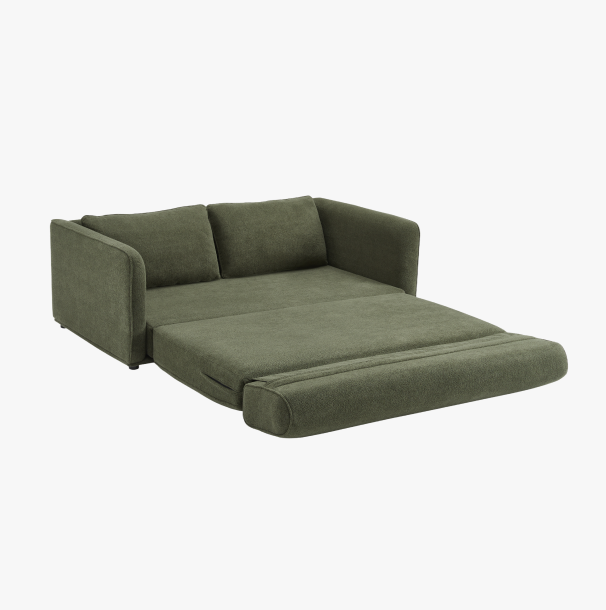
Scratch-Resistant Sleeper Sofa
Memory Foam vs Innerspring Sofa Bed Mattress: Which Is More Comfortable?
Read more
Scratch-Resistant Sleeper Sofa
Sectional vs Sofa: Which Works Better in a Pet-Friendly Living Room?
Read more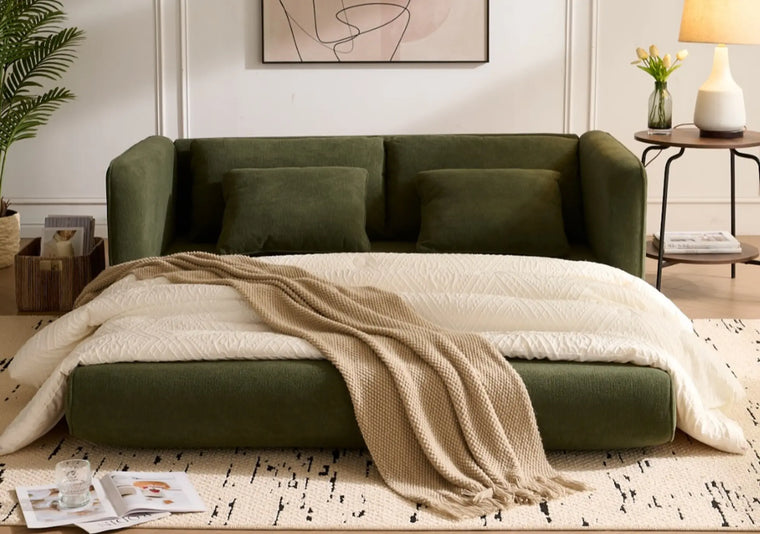
Scratch-Resistant Sleeper Sofa